When to Harvest Apples for Perfect Ripeness: A UK Guide
An apple picked a week early is sharp, woody and squeaks against your teeth. The same apple left a week longer can be floury, brown-hearted and covered in wasps on the grass. Between those two outcomes sits a window of only a few days, and it shifts every year with the weather. Learning to read the fruit rather than the calendar is what turns a so-so harvest into a basket of apples worth eating.
Why the calendar only takes you so far
Books will tell you Discovery is ready in early August. Discovery has not read the book. Variety matters most, but rootstock, aspect, soil and how much sun the tree had in July all nudge the date. A tree against a warm south-facing wall can be a fortnight ahead of one in a windy corner of the same garden.
A dwarfing rootstock in a pot on a sunny patio will ripen earlier than a standard tree in heavy clay, because the ground stays colder and wetter for longer. A tree that carried a heavy crop last year often ripens late this year, having spent its energy replacing leaves instead of filling fruit. Drought in June can push ripening forward but leave the apples small; a wet, cool August can hold everything back by ten days or more.
Ripening also happens unevenly across a single tree. Fruit on the sunny outside colours and sweetens first; the shaded middle lags behind. So check three or four apples from different parts of the tree, and expect to pick in two or three passes rather than stripping it in one afternoon.
Three tests that do most of the work
The background colour, not the blush
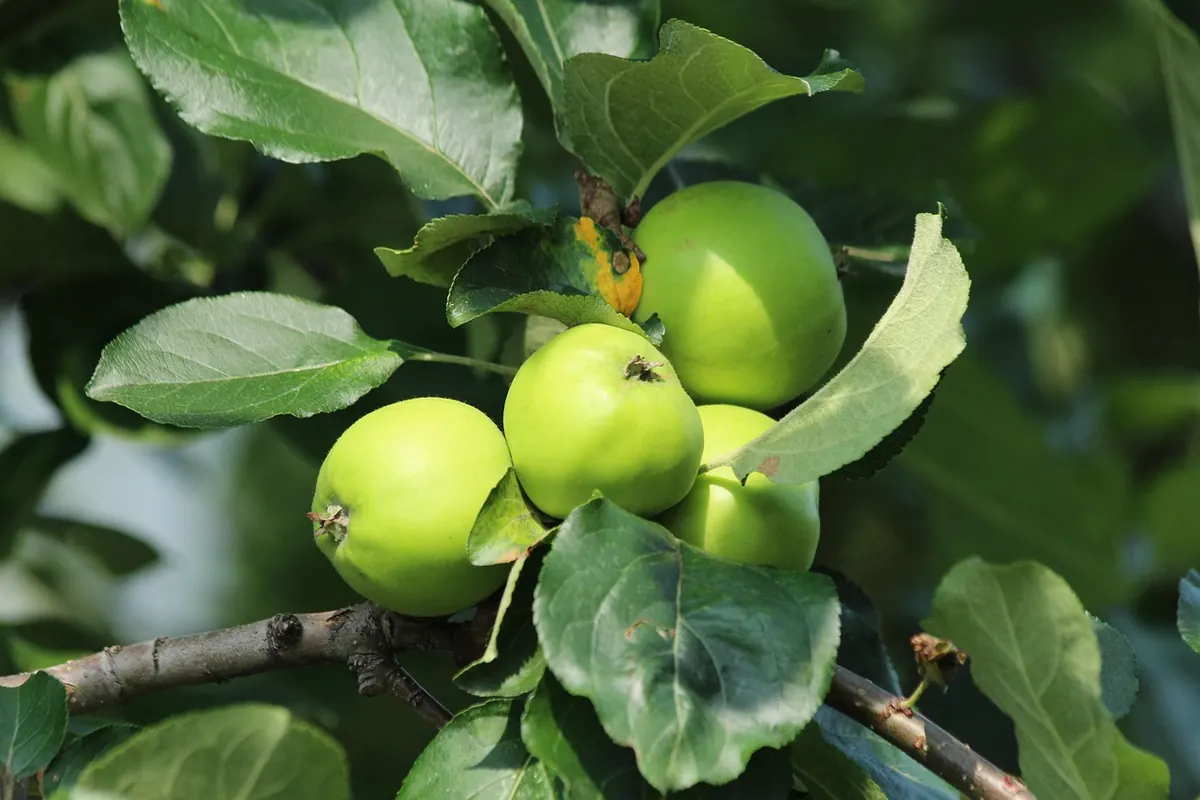
If you grow a red apple, ignore the red. The blush can be deep and glossy weeks before the fruit is edible. The useful signal is the background colour — the skin around the stalk and in the shaded hollows. On a ripening apple it shifts from a hard, grassy green to a paler yellow-green, then to soft cream. Green background: leave it. Yellowing around the stalk: start testing.
Yellow and green cookers behave the same way, going from dark green to a lighter, almost waxy yellow-green. Bramley usually shows a hint of yellow in the stem cavity first.
Pips: the honest indicator
Cut a representative apple in half across its equator, not top to bottom, and look at the seeds.
- Cream or pale white: unripe, a while to go.
- Light brown with pale edges: close, test again in a few days.
- Dark, glossy brown: ripe.
Early varieties will sometimes eat well while a pip or two is still pale, so treat pips as a strong guide in September and October and a useful one in August. Wait for most of the pips to darken, not one of them.
The lift and twist
Cup an apple in your palm, lift it towards the branch and twist gently. Ripe fruit parts with a soft snap and the stalk stays with the apple. If you have to tug, leave it for two or three days. A ripe apple also hangs slightly loose, angled on its stalk, ready to drop. Press gently beside the stalk cavity: ripe fruit gives a fraction, unripe fruit feels like a stone.
Two more field signs are worth trusting. A few sound apples lying on the grass under a tree that has not been shaken, and wasps or birds suddenly taking an interest, both mean the crop has turned the corner. Windfalls from a ripe tree bruise easily but will cook perfectly if you use them the same day.
Early varieties: late July to early September
Beauty of Bath, George Cave, Discovery and Worcester Pearmain come first, with Katy following in early September in most years. These are eating apples in the truest sense — juicy, sharp and best within a day or two of picking. They do not store. A week in the fruit bowl is the limit; a fortnight in a cool room leaves them woolly.
Pick in small batches and eat or cook them straight away. If you want to keep any, turn them into sauce, chutney or cider rather than filling the fridge. Early apples also soften fast once picked, so leave them on the tree rather than in a bowl until you actually want them.
Mid-season and late varieties: September to November
Egremont Russet, Cox's Orange Pippin, Sunset and the later cookers such as Bramley and Howgate Wonder arrive once the nights draw in. These are the apples that make a store cupboard worth having, and they are the ones most often picked too early because the first cold snap makes growers nervous.
With these, long storage is the reward for patience. An apple picked at the right moment will keep for months; one picked a fortnight early will shrivel, and one picked late will go soft almost immediately. For varieties intended for keeping, aim for the point where the pips are dark and the fruit parts easily, then handle it as though it were already bruised. Sort as you store, because one damaged apple in a box will spoil the whole box.
Storing the harvest properly
Picking well is only half the job. Where and how you put the fruit decides whether November's apples still taste of apples in February.
- Cool, dark and slightly humid. A shed, garage or unheated room at 3-7C suits most varieties. A modern kitchen is too warm and too dry.
- Single layers, not sacks. Wooden trays, slatted boxes or cardboard with ventilation holes let air move. Never pile apples deep.
- Wrap or separate. Newspaper or straw between fruit stops one rotten apple spreading. Check the boxes every fortnight and remove anything that has gone soft.
- Keep flavours apart. Apples give off ethylene, which speeds up ripening in anything nearby. Store them away from potatoes, onions and other fruit.
Roll each apple into your palm rather than dropping it into a bucket, and never tip a full basket out onto a hard surface. Small habits like these add weeks to the life of a crop.
A quick checklist for harvest day
- Check the background colour around the stalk, not the blush.
- Cut one apple across the equator and read the pips.
- Lift and twist a few fruit from different sides of the tree.
- Pick the sunny outside first, then come back in a few days for the rest.
- Use early varieties at once, and store the late ones in single layers in the cold.
Get into the habit of tasting as you pick. Bite into one apple from every batch and you will quickly learn what ripe means on your tree, in your garden, in this particular year — which is the only guide that really counts.
Photo: zoosnow / Pixabay
How to Cure and Store Onions and Garlic for Winter
Curing onions and garlic properly dries the necks and skins, so bulbs stay firm through winter. Here's how...
How to Grow Blueberries in Acidic Compost
Blueberries need acid soil to crop well. Here is how to keep the pH right in pots, water and feed them...